11 Hanover Square · London
A first-floor workshop above a doorway most people walk past, with one rule: nothing leaves the building to be finished elsewhere. The stone is cut here, the gold is worked here, and the record is kept here.
Why the house exists
A stone-cutter used to be asked for cuts nobody had ordered before. Then the trade worked out that a round brilliant, cut the same way ten thousand times, is a far better business than a fantasy cut made once.
It is. We are just not interested in it. Zeemek exists to keep the difficult cuts and settings alive by using them, not in a display case, but on the hand of somebody who will wear it to dinner.
The benches
Every ring starts as a painting in gouache on grey card, because a rendering flatters and a painting does not. CAD comes later, if it comes at all.
The gold is worked by hand after casting. Every edge that reads as crisp on a Zeemek, whether a flute, a scale or a feather's spine, happens at this bench.
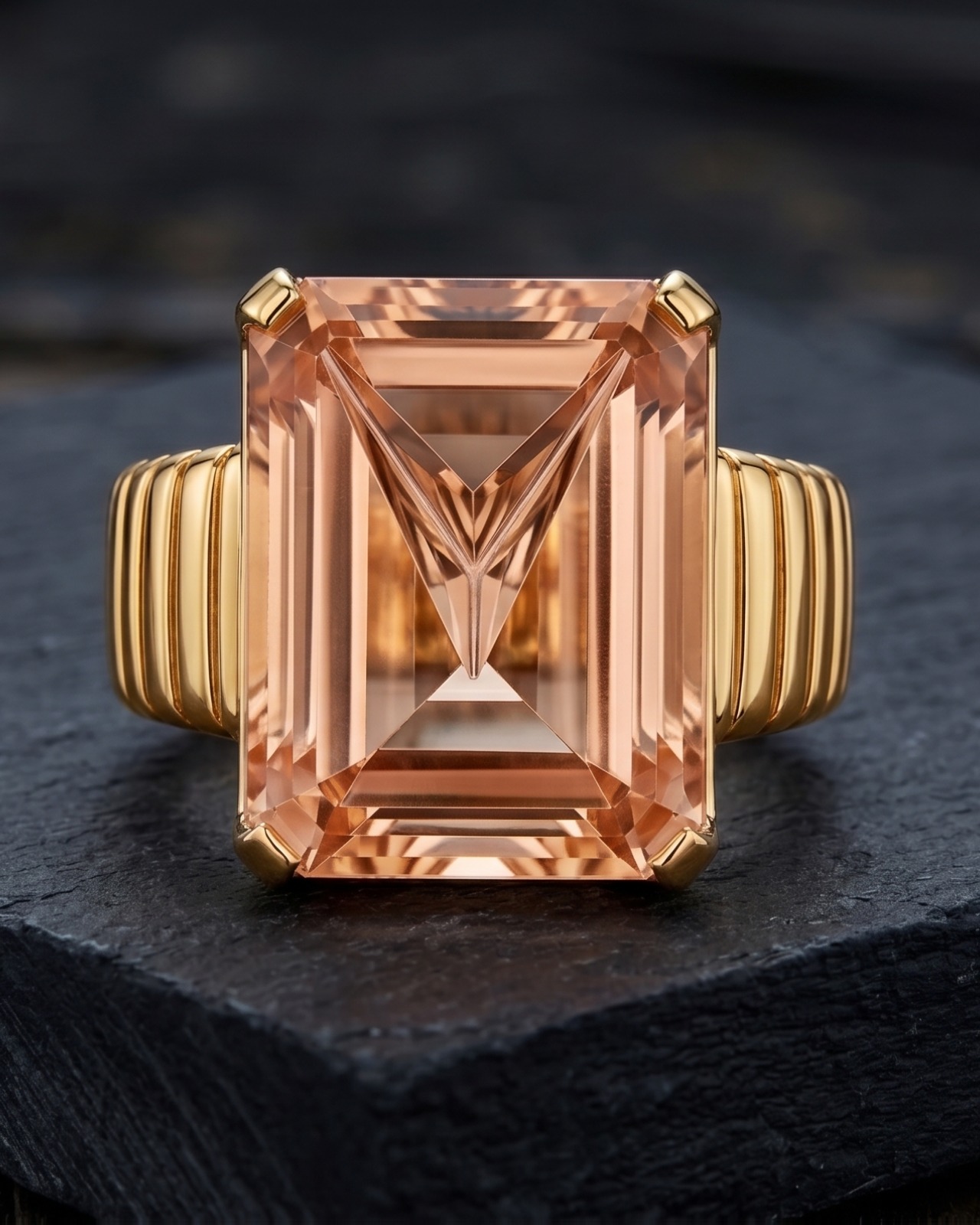
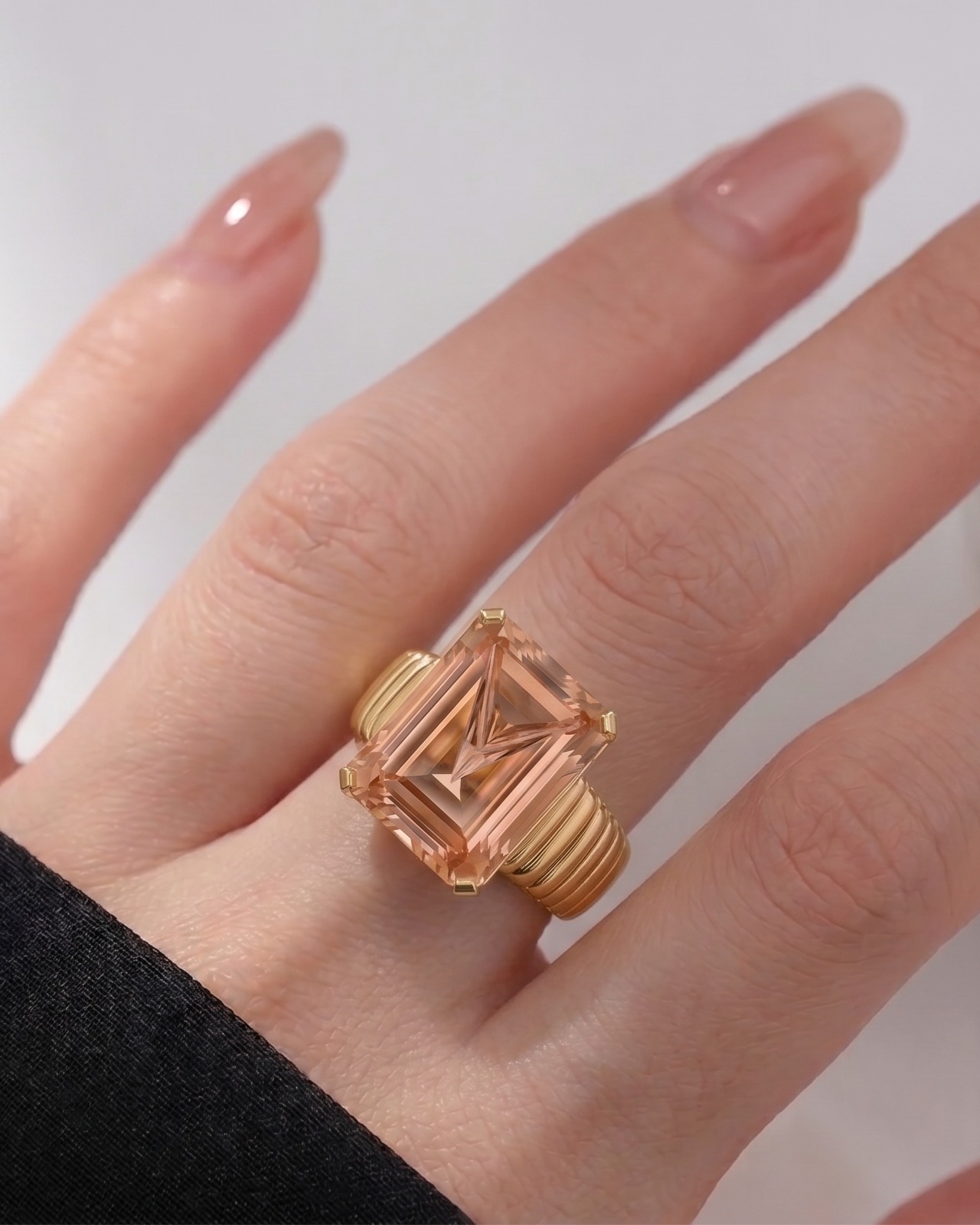
Fantasy facets cut to order rather than to a standard grade: a V-cut, a kite, a shape that exists for one stone only. By hand, at the wheel, by eye.
Cut-down, pavé, channel and claw. The quietest bench in the room, and it insists on staying that way.
Every piece is photographed, numbered and filed before it leaves, and the record is kept for as long as the house stands. Authentication lives here, permanently.
In house, end to end
Most jewellers buy stones already cut, so the design has to fit whatever shape the market produced. We cut our own, and that single fact is what makes an unusual design possible. If the ring needs a hexagon, a kite, or a facet pattern nobody has cut before, we cut it that way.

We buy at the rough stage wherever we can. It costs more time and carries more risk, because a stone can hide an inclusion that only appears under the wheel, but it is the only point at which the finished shape is still an open question.

Cut on our own wheel, to the design rather than to a catalogue grade. A hexagon, a kite, a pear, a fantasy facet pattern that exists for one stone only. The cut is a design decision here, not a constraint handed to us by a supplier.

Then the ring is drawn around the stone we have just cut: a milgrain halo for one, a plain bezel that gets out of the way for another. Because both halves happen under one roof, the setting can answer the stone instead of compromising with it.

The limit
A small bench, working properly, produces about two dozen finished commissions in a year. We have been asked many times to take more and have said no every time, because the only way to take more is to send work out, and the moment we do that, there is no reason to choose us.
So the book closes. When the places for a season are taken, we will say so and offer you the next one rather than rush yours.
Begin a commission →Visit
The atelier is open Tuesday to Saturday by appointment. There is no obligation, and the coffee is decent.
Arrange a visit